Empowering food flavour and quality control with AI-driven spectral fusion
As artificial intelligence and spectral analysis technologies converge, the control of food quality and flavour has become a critical area in the digital transformation of the food industry. Suzhou Terascan Technologies Co., Ltd., a start-up incubated at BLOCK71 Suzhou, has pioneered a "multi-spectral + multimodal AI" technology framework, offering innovative solutions for food quality inspection and intelligent flavour analysis.
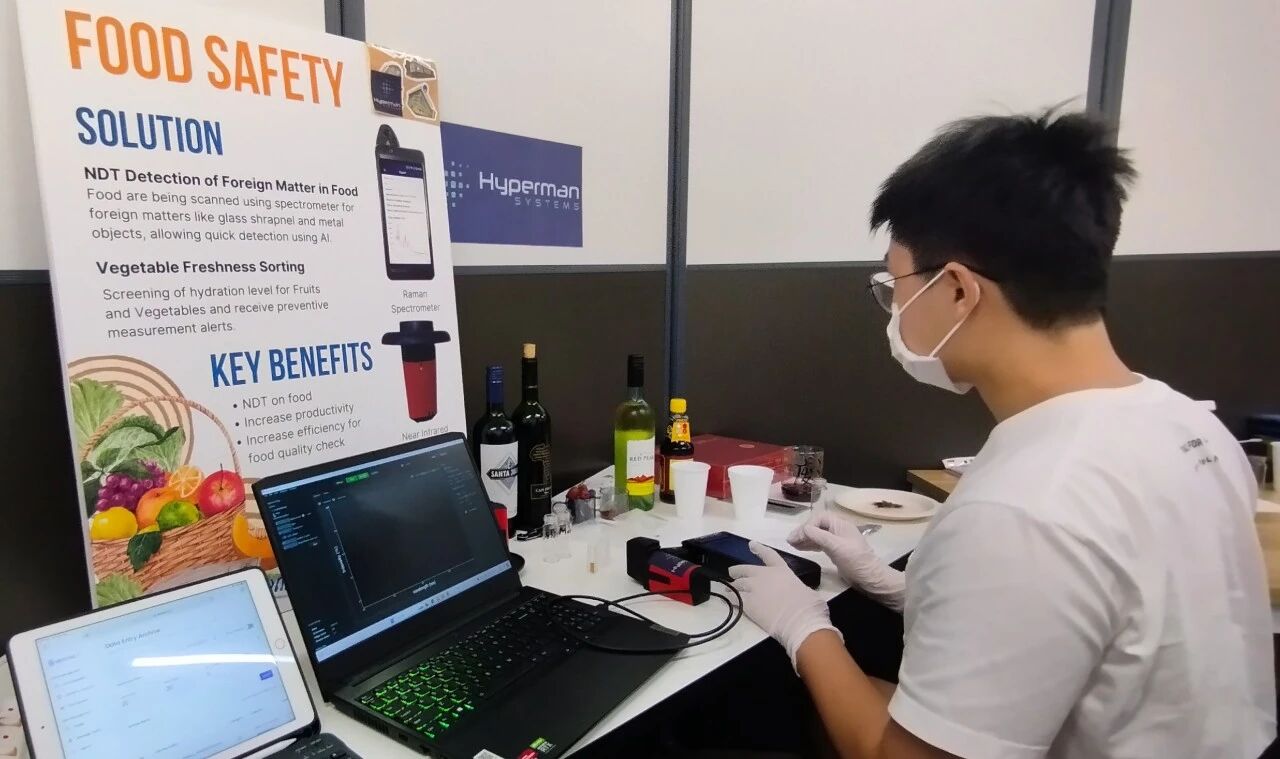
Traditional methods for evaluating food quality and flavour typically rely on laboratory testing, which is time-consuming, labour-intensive, costly, and poorly suited for the rapid analysis of key components that determine flavour and quality. Terascan's proprietary multi-spectral and multimodal AI approach effectively overcomes these limitations by enabling high-precision detection directly on the production floor.
The company's founder, Dr Zhang Nan, holds a PhD in Electrical and Computer Engineering from the National University of Singapore and specialises in artificial intelligence algorithms and spectral analysis. Under his leadership, the team integrates advanced techniques, including big-data modelling, machine learning, and deep learning with cross-modal information fusion and large-scale spectral data processing. This has resulted in the development of multiple portable spectral inspection devices, laying a solid foundation for real-time, on-site component analysis.
Terascan's core advantage extends beyond portability to its unique multi-dimensional information fusion. Unlike conventional single-spectrum techniques, which offer a limited, biased perspective, Terascan's approach integrates near-infrared, visible light, and terahertz spectra with multimodal AI. This allows the system to capture a material's chemical, physical, and visual properties simultaneously, enabling rapid, non-destructive, and highly accurate analysis of key flavour components.
This technology has demonstrated significant results in the wine industry. Terascan's proprietary framework constructs a unique 'digital flavour fingerprint' for each wine, enabling the real-time monitoring and intelligent prediction of key sensory indicators such as aroma intensity, acidity balance, and mouthfeel.
"From precise winemaking control to a personalised consumer experience, our technology aims to support the digital transformation of the wine industry. With Suzhou's robust policy support and the comprehensive incubation services of NUSRI Suzhou, we are collaborating with leading agricultural and research partners worldwide. Our goal is to deliver integrated hardware-algorithm-data solutions, extending intelligent spectral inspection across the entire food flavour value chain," said Dr Zhang.